← Lehua Gray Case study 02 · Event Orchestration

PAGERDUTY · DESIGN OWNER · EVENT ORCHESTRATION ENGINE

We made complex automation feel simple, then simpler still.

I designed a WYSIWYG orchestration canvas from 0-to-1, rooted in customer research, that let ops teams build deeply nested conditional logic without writing code. 919 customers adopted year 1, enterprise customers we closed cited the design.

Then I iterated, creating design partnerships and using session analysis to learn how teams used it at scale. I built the cross-functional case for a second release: AI recommendations to cut adoption to one click, and drag-and-drop restructuring that cut rule complexity by 36%.

A walkthrough of the rule builder — nested conditions, no code. Watch on YouTube →
My role
Design owner across both releases
Research
Customer interviews, Fullstory session analysis, moderated and unmoderated user tests
Users
Technical and non-technical alike at thousands of enterprises like Twilio, Fox, Priceline, and DraftKings
Result
919 customers, 128M events processed, 24M of them newly automated. 30% lower FTE costs and 46% fewer incidents.

01 — The problem

Customers wanted the power of code and the simplicity of a canvas.

Ops teams drown in alerts, and every one needed a human to take action. Customers knew in detail exactly what they needed to do to respond to each alert, what they didn't have was a way to automate that complex tribal knowledge, so that humans could stick to the alerts that mattered. The fix was conditional logic to automate: silence this, escalate that, group these together if they arrive within five minutes of each other, auto-ping the server to make sure it's running.

We talked to customers to understand the problem. Non-technical ops managers wanted to automate complex logic to free up their team, so visual design was key to the adoption story. If a non-technical ops lead couldn't read the tree, they wouldn't build in it, and the product would stay a feature for people who could have written the code anyway. Ease of use was also how AIOps would win against ServiceNow ITOM, BigPanda, and IBM Watson.

  • Deeply nested if-then logic had to be legible to technical and non-technical users at once.
  • Events pass through a rule tree invisibly, so debugging meant guessing which branch fired.
  • Rules had to stay readable six months later, by someone who didn't write them.

02 — THE DESIGN VISION

Give them the expressiveness they were missing, without the code.

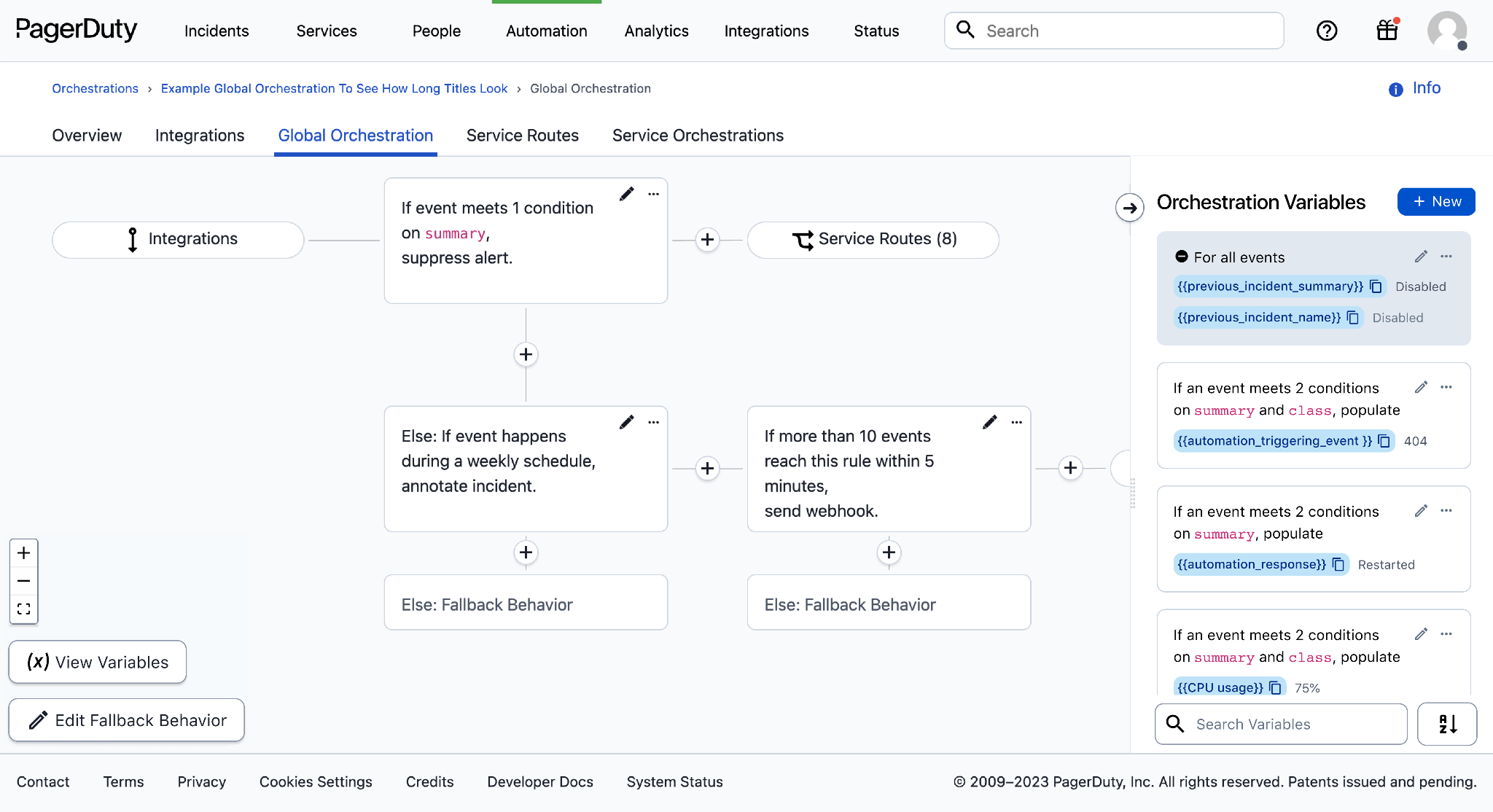
Customer interviews were unambiguous about what was missing: teams were hitting the ceiling of the old event rules and working around it with scripts and spreadsheets. So I designed a WYSIWYG engine for expressiveness — anything you could describe, you could build, and you could see the whole tree while you built it. 

DROP: the rule tree with an event path highlighted
the logic drawer, or the nested condition builder
Caption: what to notice in this one.
Make the tree readable

Nested conditions laid out so the shape of the logic is visible at a glance, without reading every line. Understandable and customizable descriptions for the rules by default. 

Show the path an event took

Click a rule, and the tree lights up every branch an event travels through to reach that rule — so debugging stops being guesswork. When sales demoed to a customer: "They said 'this is the best design I've seen at PagerDuty for letting folks know what happened'."

BUILD FROM REAL DATA

See your real events side-by-side with the builder. Click one, and it populates your condition, so you write rules against reality rather than from memory.

03 — The results

Ease of use turned into adoption and deals.

919 CUSTOMERS ADOPTED YEAR 1
128M EVENTS PROCESSED YEAR 1
30% LOWER FTE COSTS AFTER ADOPTION
46% FEWER INCIDENTS AFTER ADOPTION

"When I discovered that it works the way that it does work — huge time savings. Huge!"

— STEFAN WUENSCH, SENIOR OBSERVABILITY ENGINEER

Customers reported they were doing in days what used to take months. An international bank chose PagerDuty over IBM Watson specifically because of Event Orchestration's design and ease of use.

Path visibility won Best Product Enhancement, an internal company prize. My dev lead called it "significant improvements to the design"; my PM said "10x better."

Twilio, Fox, Priceline, and DraftKings all run on it, along with 919 other customers including many of the largest names on the Fortune 500.

Forrester's report named PagerDuty a leader in process-centric AIOps, with the highest possible score in the adoption criterion, describing Event Orchestration as a product that "goes beyond alerting to automate processes and workflows that accelerate resolutions." 
04 — The iteration

I didn't ship and abandon.

I built design partnerships with our new customers and put in hours of session analysis watching how real teams used the engine at scale — something no amount of pre-launch research can buy. Two opportunities stood out, and I worked cross-functionally to get both built, alongside dozens of smaller improvements that came straight out of those customer conversations.

Opportunity one

Recombining rules, by drag and drop

At scale, rule sets grow by accretion — session analysis showed customers managing hundreds of rules with the same conditions duplicated across many of them. I designed direct manipulation for restructuring: drag a condition into a shared branch and the tree collapses around it. Concept to early access in six weeks.

DROP: drag-and-drop rule recombination
before / after of a rule set works well here
Caption line.
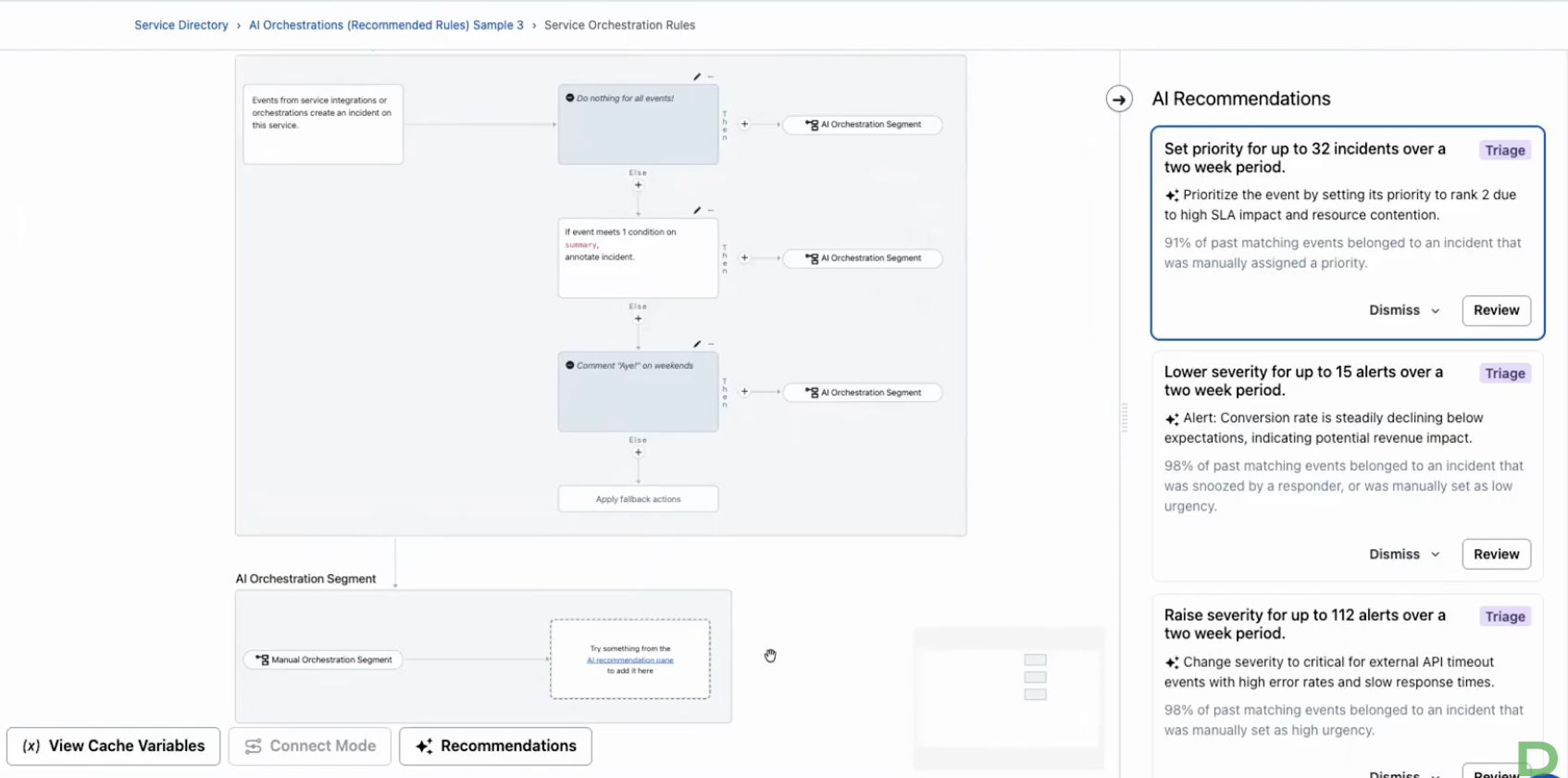
DROP: AI-recommended rules, one-click accept
Caption line.
Opportunity two

The adoption journey, down to one click

Customers didn't adopt the tool because of the blank-page problem, but their own incident history told us a lot of what they needed. Using AI we could process that history and propose rules — silence what looks like noise, raise the priority of what looks urgent. The model is infused across the pages where the work already happens, predicting what a user is about to need. Adoption became 1 click. 

Results

36% Rule complexity cut at a major international airline
1 click From never having written a rule to running automation
45 CUSTOMERS REQUESTING BETA ACCESS

"Genuinely, there's nothing I would change. It's been a massive quality of life improvement for us… Complexity is not going out of control. It's excellent, very logical. We have nothing but praise."

— MILES WHITTAKER, LEADING ONLINE GAMING PLATFORM

Executives at a major international airline gave my design partnership for this feature an unscripted shout-out at a company all-hands. 

45 customers requested beta access to the new features, including major banks, retailers, telecoms, and gaming companies. (typical beta uptake on a PagerDuty feature is 10–15).

"We delivered a large improvement to the UI/UX that directly addressed customer feedback."
— Derek Barnes, my product partner

05 — Takeaways

From release one

Design for what customers are actually blocked on, even when it's the harder thing to build. Everyone knew nested conditional logic would be difficult to make legible without code. It was also the only thing that would have moved them, and the adoption and the competitive wins came immediately.

From release two

Iterate on success. A product running at enterprise scale is the best research instrument you'll ever have, but many teams call it done and stop improving. Design partnerships and session analysis are what turned a strong product into one customers call a quality-of-life improvement.

The other thing I'd argue for on any AI project: the model shouldn't be tacked on to make an already-complicated product busier. We added AI to reduce complexity and customers loved it.

Next: SRE Agent →
All work → Contact