FINDHELP · DESIGN OWNER · PERSON-CENTERED NAVIGATION TOOLS
Case managers can focus on clients while the data collects itself.
Camden Coalition came to us with a problem. Their social workers were busy helping patients, but for one of their biggest grants the Centers for Medicare and Medicaid handed them pages of cryptic data collection requirements. It looked like they would need to shift from more face-to-face assistance for clients to more data entry for bureaucrats and data analysts. But I knew it was possible to build a useful case management system for navigating people in need, one that collected the data incidentally, throughout the process.
- My role
- Design owner and acting PM.
- Research
- Ride-alongs, in-depth interviews, comparative analysis, data analysis, and co-design
- Users
- Case managers, navigators, and helping professionals serving high-need patients — and the people in need themselves
- Result
- Certified as an approved CMS vendor, then rolled out widely as a free tool for program providers
01 — The problem
Every minute case managers had to enter data, they couldn't help patients.
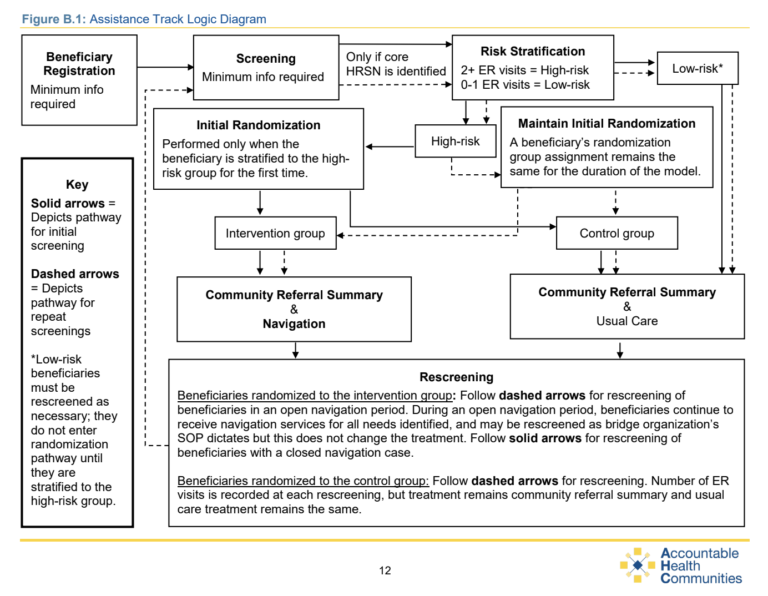
The Accountable Health Communities program is a scientific study testing whether intervening in homelessness, hunger, and family violence can reduce the healthcare costs those problems drive. The idea was on the cutting edge of healthcare, but the data collection system requirements were not written with patients in mind.
We had the privilege of partnering with the Camden Coalition, one of the most innovative and person-focused organizations in the country. Together we needed to figure out how these system requirements could be worked into a person-first system that helped case managers maximize their face-to-face time by streamlining their data entry.
02 — Understanding workflows and realities in the field
Research and synthesis, alongside the people doing the work.
I led the research and synthesis for this project, working with design partners at the Camden Coalition: ride-alongs and contextual inquiry into the case management they were already doing, the hospitals they served at, and the demographic our system would serve.
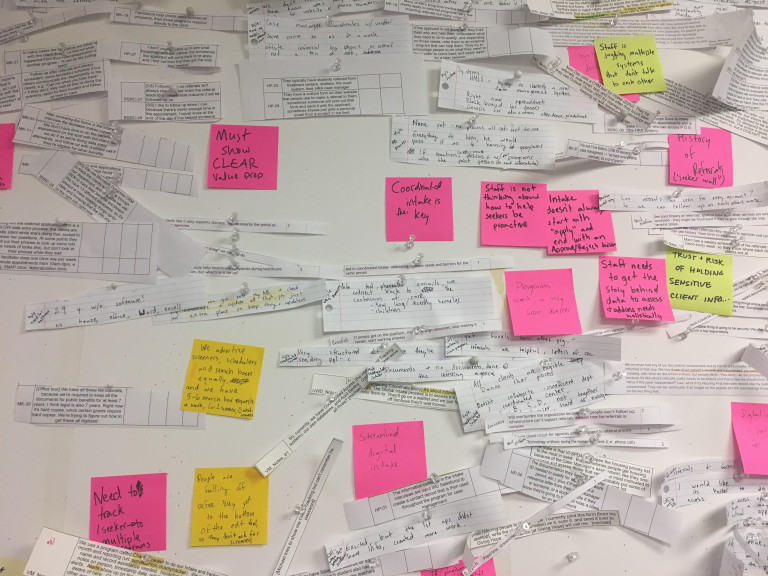
I interviewed organizations working with extremely high-need clients — mental health, sex trafficking, homelessness — talking with field social workers about the needs of their clients and their own needs while performing navigation in the field.
I did a comparative analysis of systems built to track and motivate goal-oriented action. Rather than taking inspiration from the patient-tracking systems in our own market, I took the most from goal-setting and task management apps that help people organize complicated multi-step processes, like accessing social services.
Throughout the process I worked closely with Camden to understand their client-centric backwards planning process. We met weekly to share back what the research was surfacing and to fold in their expertise. I also worked closely with a social worker on staff throughout the research and synthesis, to keep her field’s perspective in it.
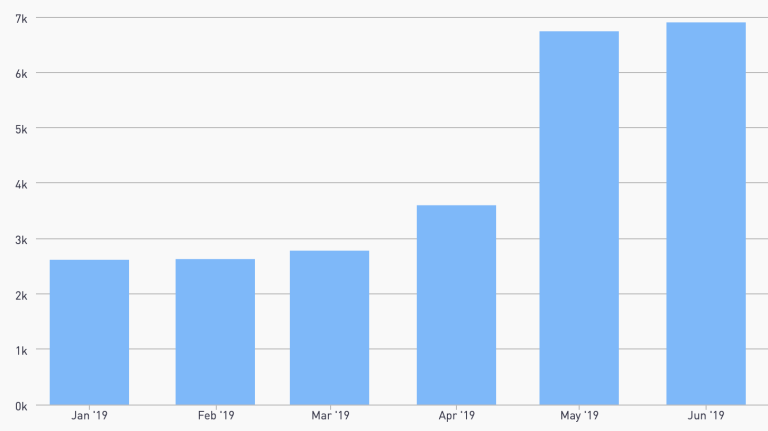
The central action case managers took was referring clients to social services programs. So I ran an in-depth analysis of our case manager referral funnel, pulling data that had never been explored. I paired the voices of users with this quantitative data to make a product case for addressing the barriers, places where users dropped off between learning about a program and actually accessing help.
The research made the case for designing around the social worker's workflow rather than around data collection — and a larger story about where these tools could fit into the wider ecosystem of our product.
03 — The design vision
Design it from the perspective of the person in need.
I asked questions from the perspective of the person in need: what tools would they find useful to self-navigate? Where would they need more structure and support? What does motivation look like for an underserved and discouraged people? How can we build tools that let people in need graduate to taking over control and addressing their own needs through the same system? In answering them, I touched the majority of the pages our users interact with: search, referral, non-profit tools, and social worker tools.
"What I find very helpful about Findhelp… this technology is geared toward what the patient needs."
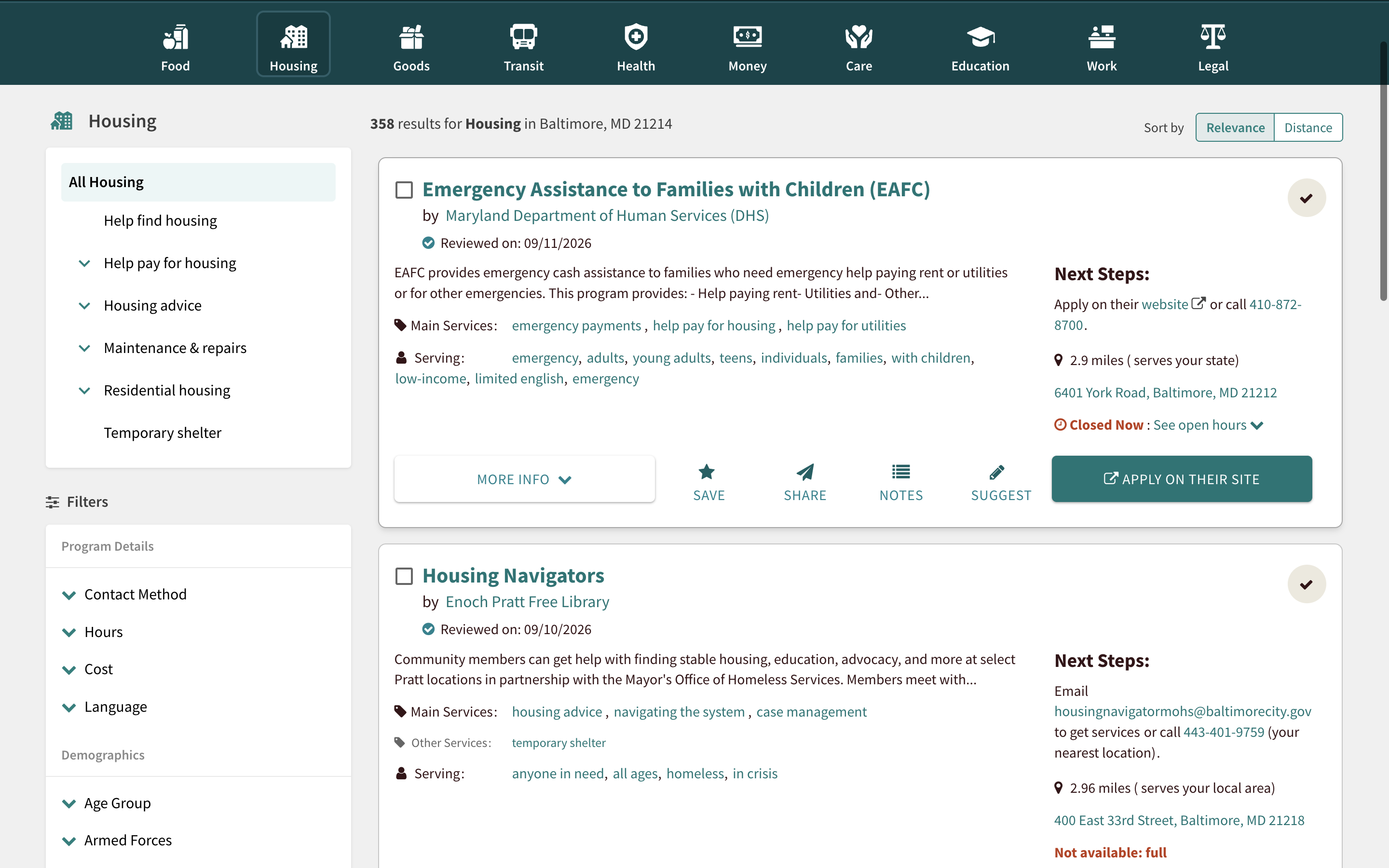
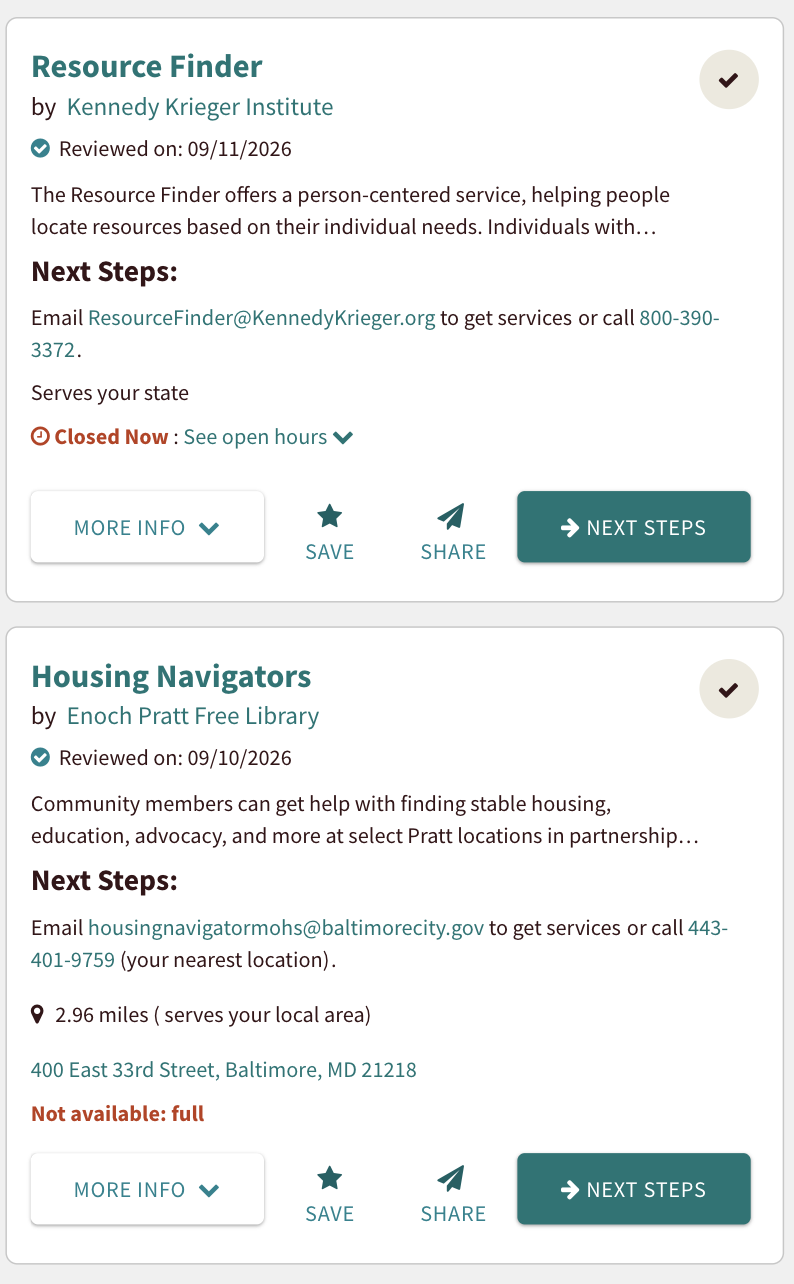
Case managers meet people where they are. I designed mobile-first web, for iPads and phones on home visits, on hospital floors, and in the car between appointments — and for desktops back in the office.
Goals, needs, and referrals for one person in a holistic, at-a-glance view. Case managers navigate their clients through it, and the study-quality data CMS required gets created incidentally, throughout the process.
Multiple views, pieces, interactions, and features had to seamlessly pass information and states across screens, and one change would ripple through many others. So I used a component-based modular design language to hold it together.
04 — Owning it end to end
A federal deadline and a partner's grant riding on it.
As the project leader, I owned the product decisions as well as the design: what made the release, what waited, and what got cut when the two collided. Certification was pass or fail against a federal deadline, which made scope the only lever I had. I made calls on what to cut from the research rather than from whoever asked loudest, then defended them to three audiences with different stakes — the developers, our own leadership, and Camden.
Camden was the relationship I protected most. Their own grant depended on this system passing validation, so I kept them inside the decisions rather than reporting out to them: weekly sessions, co-design with the social workers who would use it every day, and an interactive prototype they could react to before anything was built.
Certification hinged on reporting, so I designed and tested the reporting output the study's final analysis ran on. Then I pushed past what certification required and worked with the reporting team on reports the case workers themselves could see — so the people doing the work could refine their methods and watch their own effect on the community.
05 — The results
It became the basis for everything new in the system.
"Wow, this system, it just works."
Despite cutting the sales team in half, sales increased drastically after we built this system. Most of our new clients were primarily signing contracts to use the navigation features we built for it.
570 customer organizations ran on this system, including 211, United Healthcare, Mayo Clinic, and AARP.
Case managers on other AHC systems asked to move to ours: "We've been double entering all our data in spreadsheets until we could move to a system that works more like yours." "This is the future of our organization."
After this launched, Findhelp won #1 Best in KLAS for social determinants of health networks three years running, scoring 91.7. An executive told KLAS: "They have been thoughtful in their approach. Findhelp puts the person who needs access to social resources first."
"We use Findhelp as a case management tool. It helps us keep our patients and clients very organized to remember what resources we sent them. So then we can see if one particular resource is in progress, if one is completed… it just helps keep us organized."
Because of the scope, the tight timeline, and complications with legacy code, several of my designed behaviors and interactions were cut. Since launch, those features have been some of the most requested additions from multiple customers, and usage data shows they would be the highest-value drivers of company goals.